
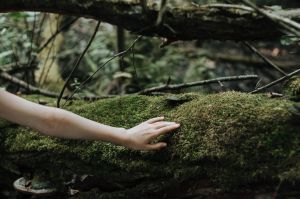
Ecotherapy is an umbrella term for approaches that intentionally incorporate nature and the human–nature relationship to support psychological well-being. Practices may involve psychotherapy outdoors, mindful engagement with natural surroundings, gardening, or structured outdoor activities. Some are clinical treatments delivered by mental health professionals; others are complementary activities that support wellness. A systematic review by Coventry and colleagues (2021), covering 50 studies, found evidence that structured nature-based interventions can improve mood and reduce anxiety and depressive symptoms, although study quality and intervention design varied. PMC
The following six practices have supporting research. They overlap, and evidence for one specific activity should not be assumed to apply equally to every form of ecotherapy.
- Nature-based psychotherapyThis practice combines psychotherapy with intentional use of a natural setting, such as a therapy garden or woodland. Sessions may incorporate therapeutic conversation, experiential activities, and reflection connected to treatment goals.Supporting research: Stigsdotter and colleagues (2018) randomly assigned 84 adults with stress-related illnesses to a structured nature-based therapy program or a specialized cognitive behavioral therapy program. Both groups improved in psychological well-being and burnout, with improvements maintained at 12 months. Researchers found no statistically significant difference between treatments. This supports the particular program studied; it does not establish that all outdoor psychotherapy approaches are equivalent to CBT. Cambridge Core
- Nature-based mindfulnessThis involves paying deliberate, nonjudgmental attention to present experiences in nature—for example, noticing birdsong, changing light, or the sensation of walking. Practices may include guided sensory awareness, seated observation, or mindful walking.Supporting research: Nisbet, Zelenski, and Grandpierre (2019) randomly assigned 100 participants to a 20-minute indoor walk, outdoor walk, or outdoor walk with mindfulness instruction. Outdoor walkers reported better mood and greater nature connectedness than indoor walkers. Adding mindfulness produced greater awareness, stronger nature connectedness, and less negative affect than outdoor walking alone, but did not significantly increase positive affect. These were immediate outcomes rather than evidence of lasting clinical recovery. journals.sagepub.com
- Forest bathing, or shinrin-yokuForest bathing involves slowly and attentively experiencing a forest through the senses. Its emphasis is on immersion and observation, rather than distance, speed, or strenuous exercise.Supporting research: Park and colleagues (2010) studied 280 young adults in field experiments across 24 Japanese forests, comparing forest and city settings. Forest exposure produced lower salivary cortisol, pulse rate, and blood pressure, alongside autonomic nervous system measures consistent with relaxation. These findings support short-term physiological stress reduction; they do not demonstrate treatment of a psychiatric disorder. Springer Nature Link
- Therapeutic horticulture and horticultural therapyThese practices use plant-related activities—such as planting seeds, tending vegetables, or caring for flowers—to support therapeutic goals. Activities can offer opportunities for engagement, routine, social connection, and reflection.Supporting research: Ng and colleagues (2018) conducted a randomized trial involving 59 older adults assigned to horticultural therapy or a waitlist control. Participants in horticultural therapy showed improvement in positive relationships with others, and researchers reported changes in selected inflammatory biomarkers. The findings offer preliminary support for social well-being, but should not be interpreted as proof that gardening treats depression or trauma. PubMed
- Green exercise and therapeutic nature walkingGreen exercise means physical activity in natural surroundings, including walking, hiking, or outdoor movement groups. It can be incorporated into a therapeutic plan, although recreational exercise itself is not necessarily psychotherapy.Supporting research: Bratman and colleagues (2015) found that healthy participants who completed a 90-minute nature walk experienced reduced rumination—repetitive, negatively focused thinking—and reduced activity in a brain region associated with rumination. Participants who walked in an urban setting did not show the same changes. This supports a possible psychological benefit of nature walking, but the study did not test treatment for diagnosed depression or PTSD. PubMed
- Blue-space interventionsThese involve structured engagement with natural water environments, such as oceans, lakes, or rivers. Examples include surf therapy and facilitated water-based activities. Research findings are specific to the activity studied and cannot automatically be extended to all time spent near water.Supporting research: Walter and colleagues (2023) randomly assigned 96 active-duty service members with major depressive disorder to six weeks of surf therapy or hike therapy. Depression symptoms improved in both groups, without a significant difference in their overall rate of improvement. Most participants also received psychotherapy or medication, and there was no usual-care-only comparison group, so the findings primarily support these activities as potentially useful additions to care. Springer Nature Link
For a practice focused on trauma, ecotherapy is best described as a promising complementary approach, with a developing evidence base for PTSD. A 2026 systematic review found that PTSD symptoms often decreased after nature-based interventions, but its exploratory analysis did not find a statistically significant benefit when intervention groups were compared with control groups. That distinction matters: improvement after participation alone does not establish that the intervention caused the improvement. PubMed

